
Tips for Managing Stress and Anxiety During Pregnancy
February 27, 2026
Exploring the Advantages of IV Infusion Therapy for Immune Support
February 27, 2026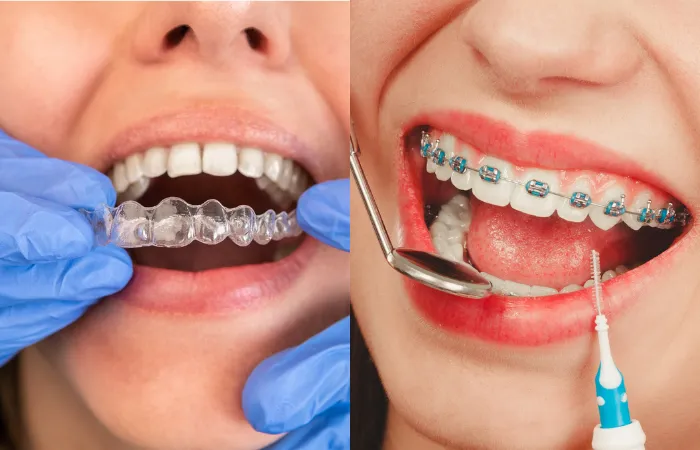
For straightening teeth, traditional braces have been the standard treatment for decades; they use metal brackets and wires to shift teeth into proper alignment. Clear aligners are a newer approach, using custom-made, transparent plastic trays to gradually move teeth. While both methods can effectively straighten teeth, clear aligners offer some advantages that make them an appealing choice for many patients.
Understanding Clear Aligners
Clear aligners use a series of custom-fabricated plastic trays that fit snugly over your teeth. Each aligner applies gentle pressure to specific teeth, moving them incrementally toward their ideal positions. Patients typically wear each set of aligners for one week, and then they progress to the next set in the series.
Traditional braces, by contrast, rely on metal or ceramic brackets that are bonded to each tooth. An orthodontist threads a wire through these brackets, and they periodically tighten it to adjust tooth position. This process requires regular in-office adjustments every four to 12 weeks throughout the treatment period.
The fundamental difference lies in the mechanics. Aligners are removable and use controlled force through plastic trays, while braces remain fixed to teeth and use constant wire tension. Both methods can treat a wide range of orthodontic issues, but the specific approach and daily experience differ.
Experiencing Daily Life
One advantage of clear aligners is their removability. You can take them out for meals, which means no dietary restrictions. Traditional braces require avoiding sticky, hard, or chewy foods that might damage brackets or wires, and this limits food choices throughout treatment.
Oral hygiene is more simple with aligners because you can:
- Brush and floss normally without navigating around brackets and wires.
- Remove aligners to clean both your teeth and the trays themselves.
- Maintain your regular dental care routine without special tools.
Comfort levels differ between the two options as well. Aligners have smooth edges; they may not irritate your cheeks or gums the way brackets and wires sometimes can. While you may experience temporary discomfort when switching to a new aligner set, this typically resolves within a day or two. Traditional braces can cause mouth sores and require orthodontic wax to protect soft tissues from bracket edges.
Exploring Treatment Results
Both clear aligners and traditional braces can deliver results, but the commitment to using aligners appropriately is a factor in their effectiveness. The result depends largely on the complexity of your case and your commitment to treatment. Studies have shown that clear aligners can successfully treat mild to moderate orthodontic issues, including crowding, spacing, and certain bite problems.
Treatment typically begins between the ages of eight and 12. The duration varies based on individual needs rather than the method chosen. Simple cases might resolve in six to 18 months with either approach, but more complex situations may require 24 months to two years or longer. Your orthodontist will provide a personalized timeline that is based on your specific needs.
One main factor in successful aligner treatment is compliance. You must wear your aligners for 20 to 22 hours daily to achieve the planned results, and removing them too frequently or for extended periods can delay progress and compromise outcomes. Traditional braces do not require this level of patient responsibility since they work continuously.
Identifying Suitable Candidates
Aligners work best for patients with mild to moderate orthodontic concerns. Ideal candidates typically have issues such as minor crowding or small gaps between teeth, or they may have mild bite misalignments. Adults and responsible teenagers who can commit to wearing aligners as prescribed often achieve excellent results.
Your lifestyle and personal preferences also factor into candidacy. If you play contact sports, aligners can be removed during games and practices, eliminating the risk of bracket-related injuries. Musicians who play wind instruments may find aligners easier to manage than braces; appliances in the mouth can affect sound production.
Learn More About Clear Aligners
Clear aligners offer numerous advantages over traditional braces, including removability for eating and cleaning, improved aesthetics, and enhanced comfort. Daily life with aligners involves fewer dietary restrictions and simpler oral hygiene routines compared to braces. Both treatment methods can deliver excellent results when used for appropriate cases, but aligners require patient compliance to be effective. If you want to learn more about clear aligners and how they work, consult an orthodontist near you.