
Exploring Strategies for Sustainable Weight Loss
September 30, 2026
Effective Home Remedies and Care Tips for Coping with Bunions
October 10, 2026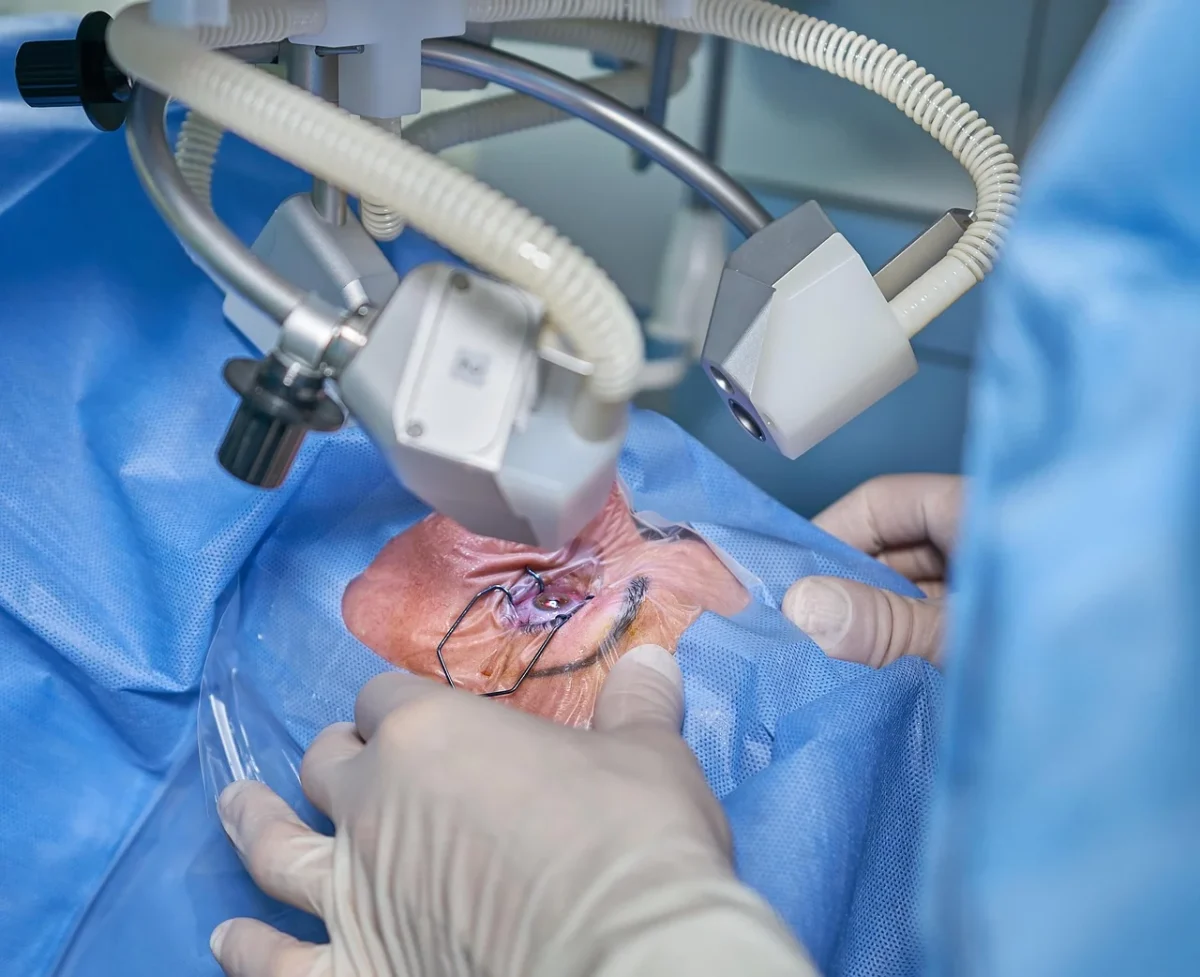
Cataracts develop when your eye’s natural lens becomes cloudy with age or other health factors. They affect your ability to see clearly, particularly when driving at night or reading in low light. Cataract surgery lets you replace the cloudy lens with an intraocular lens suited to your visual needs. Here is how the procedure’s potential benefits and risks relate to vision correction:
Restore Clearer Vision
Cataract removal addresses clouding that prevents light from passing clearly through the natural lens. During the procedure, phacoemulsification breaks up the lens material before the cloudy lens is removed. An intraocular lens then sits inside the lens capsule and provides a new focusing surface. Laser assistance is also available for certain steps during the procedure. The following benefits relate directly to changes produced by cataracts:
- Improved clarity after removing the cloudy natural lens.
- Better vision in low-light settings affected by cataracts.
- Reduced halos associated with lens clouding.
- Clearer color perception after replacing the cloudy lens.
- A new focusing lens is selected based on individual visual requirements.
Expand Lens Options
Your IOL choice will affect your vision after cataract surgery, so it is part of the surgical discussion. A regular monofocal lens has one main focal length, whereas lifestyle lenses offer multiple focal ranges. Multifocal lenses correct near, intermediate, and distance vision, and toric lenses correct astigmatism.
Your medical history, lifestyle, job, and hobbies also affect lens selection. When you talk with a surgeon, they will account for those factors as well as your eye measurements. Some lens designs are developed to minimize the need to wear glasses at multiple distances. Others focus on certain optical requirements, such as astigmatism.
Manage Temporary Effects
Recovery after cataract surgery may include temporary changes that differ from longer-term surgical complications. Recovery effects listed by the surgical center include blurry vision, slight discomfort, light sensitivity, redness, and dry or watery eyes. The timing and intensity of these symptoms vary by patient, and follow-up appointments provide opportunities to review healing.
Blurred vision may occur during the early healing period as the eye adjusts after the procedure. Light sensitivity and redness also appear among the listed postoperative effects. Dryness or increased tearing may accompany other temporary changes during recovery.
Knowing which symptoms are part of routine healing helps separate them from problems that need medical attention. Persistent or worsening symptoms warrant discussion with your surgical team rather than assumptions about normal recovery. Follow-up care also provides an opportunity to review symptoms alongside your eye’s progress after surgery.
Address Surgical Risks
Cataract surgery carries potential complications, including infection, bleeding, pressure changes, retinal detachment, and posterior capsule opacification. Serious complications are uncommon, and their effects are typically minimal, such as slight vision changes. They can be as extreme as vision loss. Your medical history and eye health influence the risks discussed during a surgical evaluation. A detailed consultation provides an opportunity to review those risks alongside your lens options and procedure plan.
Explore Cataract Surgery Options
Your lens choice goes beyond removing the cataract, especially when different IOL designs address different visual needs. Advanced surgical systems also form part of the available treatment approach, including 3D visualization. A consultation with a cataract surgeon provides an opportunity to review your eye health, visual priorities, and available lens options. Schedule a cataract evaluation to discuss whether cataract surgery fits your current vision needs.