
Can I Get Botox for Hyperhidrosis?
February 24, 2026
The Different Materials Used for Dental Fillings
February 24, 2026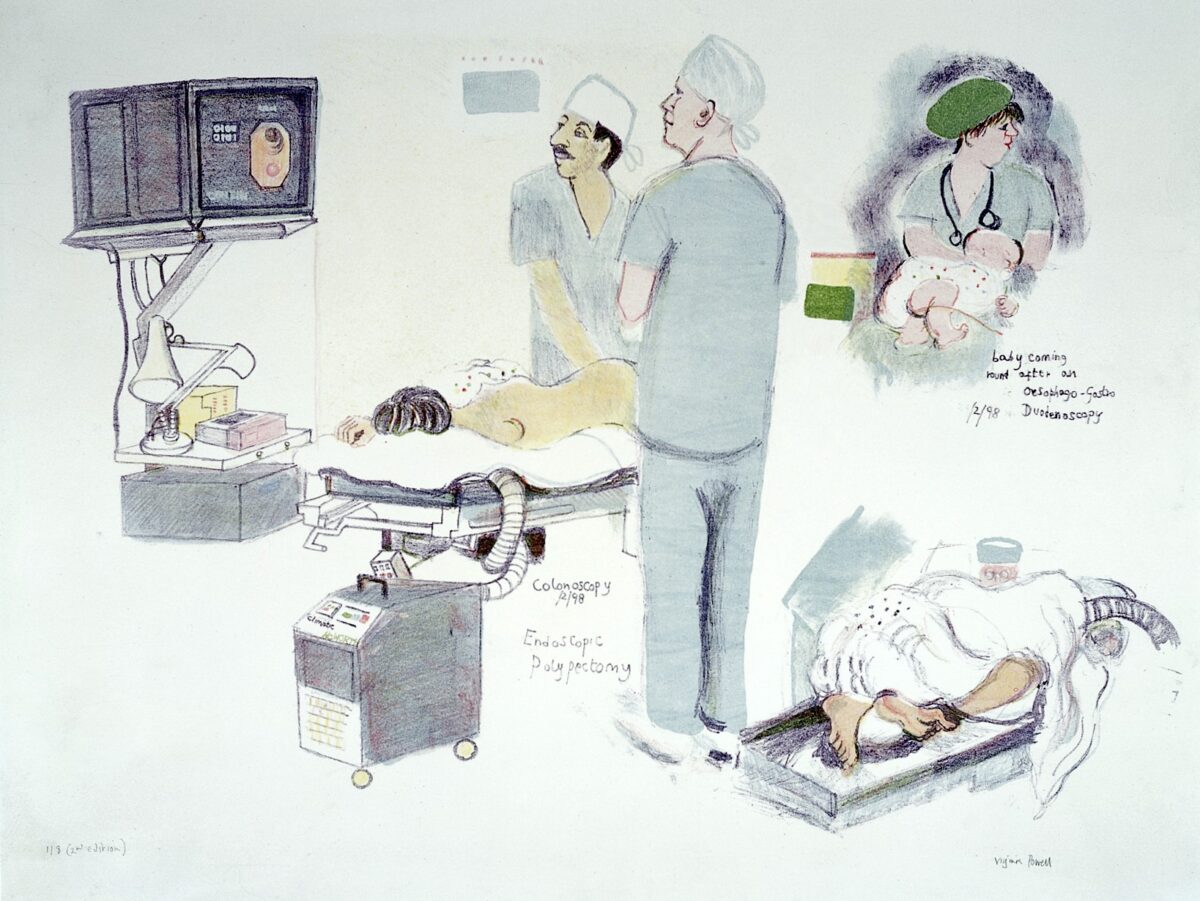
L0028329 Endoscopy operations. Colour lithograph by Virginia Powell, Credit: Wellcome Library, London. Wellcome Images images@wellcome.ac.uk http://wellcomeimages.org Endoscopy operations. Colour lithograph by Virginia Powell, 1998. Lettering: Colonoscopy /2/98. Endoscopic polypectomy. Baby coming round after an oesophago-gastro-duodenoscopy /2/98 Virginia Powell Observed at the Chelsea and Westminster Hospital. Left, surgeons performing a colonoscopy on a 13 year old girl who was not putting on weight. The reason for her illness is seen on the real-time monitor on the left: it is a polyp in the colon (shown as the red circle on the screen). In the foreground, a Howorth climate controller to keep the patient warm. Above right, a nurse with a stethoscope holding a baby which had also failed to gain weight, and which had had an exploratory endoscopy. Below right, a boy after colonoscopy, lying on his side with the anaesthetist peeping over the top Copyright the Trustee of the Wellcome Trust Coloured Lithograph 1998 By: Virginia PowellPublished: February 1998 Copyrighted work available under Creative Commons Attribution only licence CC BY 4.0 http://creativecommons.org/licenses/by/4.0/
An endoscopy and a colonoscopy serve different diagnostic purposes, but both involve examining the digestive tract with specialized instruments. While a colonoscopy focuses specifically on the colon and rectum, an endoscopy examines the upper digestive system. Understanding each procedure can help you recognize symptoms that warrant medical evaluation and guide conversations with your healthcare provider. Here is more information about the differences between endoscopy and colonoscopy:
Visualizing the Upper Gastrointestinal Tract
An endoscopy is a procedure that allows physicians to visually examine the upper gastrointestinal tract using a flexible tube equipped with a light and a camera. The procedure can identify inflammation and other abnormalities in the esophagus, stomach, and duodenum. During the examination, physicians also collect tissue samples for biopsy, or they remove polyps and stopping bleeding.
Upper endoscopy typically takes five to 20 minutes, and it is performed under sedation. Patients fast for several hours beforehand to have clear visibility during the examination. The procedure is minimally invasive and carries low risk when performed by experienced gastroenterologists.
Diagnosing Common Digestive Conditions
Several digestive conditions may necessitate an endoscopy for accurate diagnosis or treatment:
- Gastroesophageal reflux disease, or GERD: Chronic acid reflux can damage the esophageal lining, and an endoscopy helps assess the extent of damage.
- Peptic ulcers: These open sores in the stomach or small intestine can cause pain and bleeding.
- Celiac disease: An endoscopy with biopsy can confirm intestinal damage caused by gluten sensitivity.
- Difficulty swallowing: Narrowing of the esophagus or other structural problems may require endoscopic evaluation.
- Unexplained anemia: When iron deficiency occurs without an obvious cause, an endoscopy can identify bleeding sources in the upper digestive tract.
Physicians may also recommend endoscopy when patients experience persistent abdominal pain, nausea, or vomiting that does not respond to standard treatments. Early detection through endoscopy can prevent complications and guide appropriate treatment plans.
Screening for Colorectal Health
A colonoscopy examines the large intestine and rectum to screen for colon cancer, polyps, and inflammatory bowel diseases. Most adults should begin regular colonoscopy screening at age 45, but those with a family history of colorectal cancer or other risk factors may need earlier or more frequent examinations. When a provider performs a colonoscopy, they insert a flexible scope through the rectum to visualize the entire colon.
Colonoscopy is the gold standard for colorectal cancer screening because it can both detect and remove precancerous polyps during the same procedure. This dual capability makes it more comprehensive than other screening methods. Physicians typically recommend repeat colonoscopies every 10 years for average-risk individuals with normal results, but intervals may be shorter for those with polyps or other findings.
Preparation for colonoscopy requires a thorough bowel cleanse using prescribed laxatives. The preparation process can be uncomfortable, but it is necessary for optimal visualization and accurate results. Patients receive sedation during the procedure, which usually lasts 30 to 45 minutes.
Distinguishing Procedure-specific Symptoms
Patients may seek medical attention when experiencing persistent heartburn or acid reflux that does not respond to standard medication. Physicians suggest an endoscopy to investigate difficulty when swallowing, and they use the results to evaluate unexplained weight loss. This procedure helps identify the cause of persistent nausea or unresolved upper abdominal pain. If a patient notices black or tarry stools, a healthcare professional may perform an endoscopy to check for upper gastrointestinal bleeding.
While rectal bleeding or blood in the stool is a primary indicator, a colonoscopy may also be necessary for other gastrointestinal changes. Changes in bowel habits lasting more than a few weeks or persistent abdominal cramping warrant a clinical evaluation. Medical professionals frequently recommend this screening for individuals over age 45; they prioritize testing at age 40 for those with a family history of colorectal cancer. Unexplained weight loss further suggests the need for this diagnostic tool to evaluate lower digestive health.
Learn About Endoscopy and Colonoscopy
Both endoscopy and colonoscopy help doctors diagnose and treat digestive disorders. An endoscopy examines the upper digestive tract, but a colonoscopy focuses on the colon and rectum. Each procedure addresses different symptoms and conditions, though some situations may require both examinations for comprehensive evaluation. If you want to learn more about when you may need an endoscopy or colonoscopy, consult a digestive health specialist near you.