The Different Materials Used for Dental Fillings
February 24, 2026
Frequently Asked Questions About Foot Surgeons
February 24, 2026
Starting your journey toward a healthier smile is a positive step, and understanding what to expect helps you be prepared. Your first orthodontist visit will focus on gathering information, assessing your dental structure, and discussing possible treatment options. The orthodontist will examine your teeth and provide your diagnosis before your appointment ends. Have clear expectations and leave your appointment informed.
Examination and Diagnosis
Your first visit involves a clinical examination of your teeth. The orthodontist will look inside your mouth, and they may ask you to bite down so they can observe how your teeth fit together. This visual inspection helps the doctor note potential concerns, such as crowding, spacing, or bite irregularities that may require further attention. The examination is the first step because it establishes the current condition of your teeth and jaws. Each part of this process provides information that shapes your potential treatment. The orthodontist assesses how your upper and lower teeth meet, and this is usually called your bite. Signs such as crossbites, overbites, or underbites are noted for observation and discussion.
Consultation and Options
Once the examination is complete, you will sit down for a detailed consultation of the findings and discuss your options. The orthodontist will explain your diagnosis clearly and the reasons behind the recommended treatments. You will hear about alignment concerns, such as spacing or bite issues, and learn how treatments like braces address them. During this conversation, you are encouraged to ask any questions you have.
You may want to know the treatment timeline and how often appointments are scheduled. Your orthodontist can answer all of these. Also ask about daily care, what to expect with adult braces, and the steps involved after treatment finishes. Discussion of your goals and expectations is welcomed, so ask about retainer options for after treatment. The consultation is centered on developing a plan that fits your dental situation and lifestyle.
Selection and Options
During your visit, the orthodontist may discuss several types of braces and aligners, based on your needs and preferences. Traditional metal braces are an option, and they are known for their customization. Clear braces are similar in function to metal braces but use tooth-colored or transparent materials to blend with your teeth. This attempts to make them less noticeable. Lingual braces are attached to the back side of your teeth, offering a discreet option. These may be chosen for those concerned about visible appliances. Invisalign aligners are clear, removable trays designed to gradually move your teeth. Aligners are sometimes preferred by patients who want a nearly invisible solution. Your orthodontist will explain how each option works, and they will help you understand what to expect during treatment and care. Choose the appliance that fits your lifestyle and treatment goals.
Make your Orthodontist Appointment Today
Your first visit sets the foundation for your orthodontic journey, so don’t hesitate to call. If you are ready to proceed, the team will help you book a time to start your treatment. Contact your office today to confirm your treatment plan. Let them help you achieve an aligned smile.
Related posts


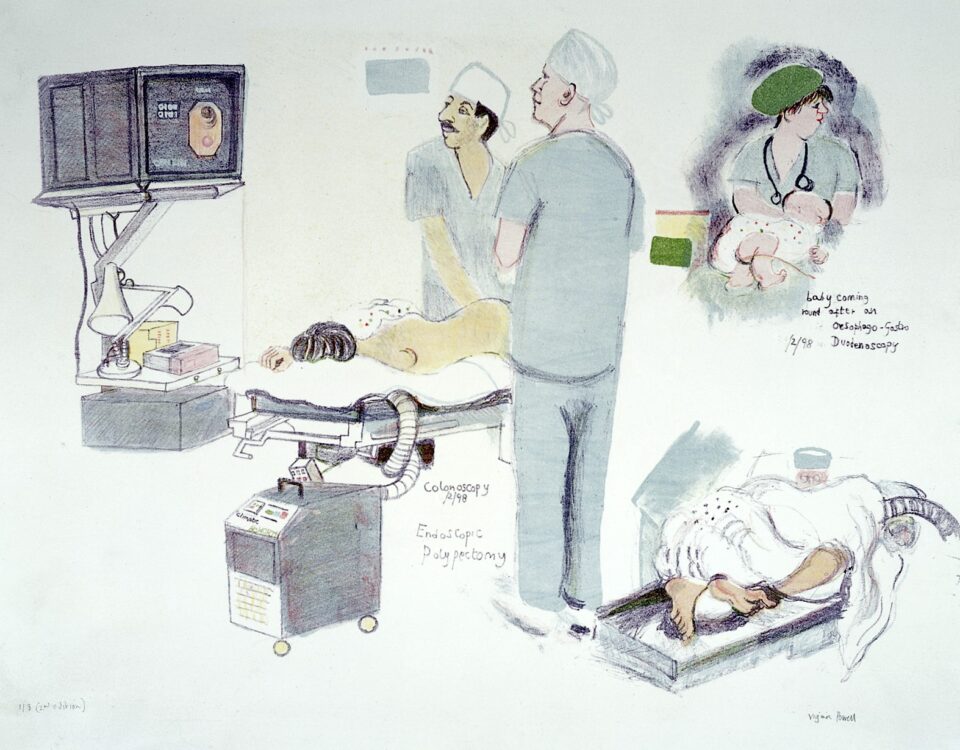
L0028329 Endoscopy operations. Colour lithograph by Virginia Powell, Credit: Wellcome Library, London. Wellcome Images [email protected] http://wellcomeimages.org Endoscopy operations. Colour lithograph by Virginia Powell, 1998. Lettering: Colonoscopy /2/98. Endoscopic polypectomy. Baby coming round after an oesophago-gastro-duodenoscopy /2/98 Virginia Powell Observed at the Chelsea and Westminster Hospital. Left, surgeons performing a colonoscopy on a 13 year old girl who was not putting on weight. The reason for her illness is seen on the real-time monitor on the left: it is a polyp in the colon (shown as the red circle on the screen). In the foreground, a Howorth climate controller to keep the patient warm. Above right, a nurse with a stethoscope holding a baby which had also failed to gain weight, and which had had an exploratory endoscopy. Below right, a boy after colonoscopy, lying on his side with the anaesthetist peeping over the top Copyright the Trustee of the Wellcome Trust Coloured Lithograph 1998 By: Virginia PowellPublished: February 1998 Copyrighted work available under Creative Commons Attribution only licence CC BY 4.0 http://creativecommons.org/licenses/by/4.0/