

How a Foot Doctor Can Diagnose and Treat Bunions
July 16, 2026
Maximizing the Benefits of Hearing Aids for Better Hearing
July 17, 2026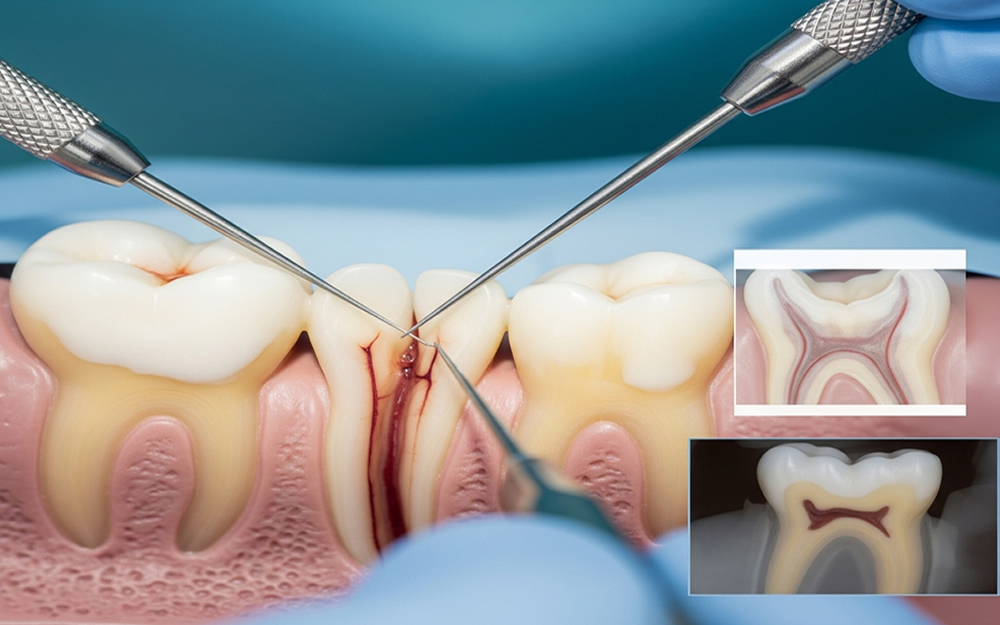
The center of each tooth contains soft tissue called pulp, which holds nerves and blood vessels. When decay, cracks, or trauma allow bacteria to reach this pulp, inflammation and infection can follow. Root canal therapy is a dental procedure that treats infection or damage inside a tooth. During a root canal, a dentist or endodontist removes the affected pulp, cleans the inner chamber, and seals the space. Here is how this treatment addresses problems inside the tooth without removing the tooth itself:
Removing Infection
A root canal targets the source of damage or infection within a tooth. The endodontist will first numb the area with local anesthesia, then create a small opening in the crown of the damaged tooth to reach the pulp chamber. Using fine instruments, they remove the infected or damaged pulp and shape the canals for cleaning. An antimicrobial solution flushes out bacteria and debris. Once the canals are clean and dry, the provider fills them with a rubber-like material called gutta-percha and seals the opening with a temporary or permanent filling.
Preserving Natural Teeth
A root canal may be necessary when the soft inner tissue of a tooth has deep decay, has undergone repeated dental procedures, has a crack or chip, or has experienced trauma that leads to pulp exposure. Left untreated, these issues can lead to more severe infections and even tooth loss, making timely treatment fundamental.
Patients can expect the procedure to take one or two visits, and many have mild soreness for a few days as the surrounding tissue settles. A root canal allows someone to keep a natural tooth that might otherwise require extraction. After the pulp is removed, the tooth remains supported by the surrounding bone and ligaments. The final restoration, which is usually a crown, completes the treatment and protects the tooth from further damage.
The crown is set on top of the treated tooth, and it:
- Covers the Outer Surface
- Restores Strength
- Distributes Bite Pressure
This final restoration is necessary because a tooth without pulp can become more brittle over time, and a well-fitting restoration adds structural support. Preserving the natural tooth also helps maintain the alignment and spacing of neighboring teeth.
Regaining Function and Appearance
After treatment and placement of the final restoration, the tooth can be used normally. Patients can chew, bite, and speak using the treated tooth much as they did before the infection developed. The restoration is shaped and sized to match their natural bite.
Crowns and fillings can be color-matched to the surrounding teeth, so the restored tooth blends with the rest of the smile. Good oral hygiene after the procedure helps the restored tooth last. Regular brushing, flossing, and dental checkups allow the provider to monitor the tooth and the restoration over time.
Get a Timely Root Canal
Endodontists are dentists with additional training focused on the inside of the tooth, and they perform root canals regularly using specialized tools and techniques. If you experience persistent tooth pain, temperature sensitivity, swelling, or discoloration, schedule an evaluation. Addressing a damaged tooth promptly can reduce the risk of infection spreading to surrounding tissues. A specialist can examine the tooth, review imaging, and recommend an appropriate course of action.